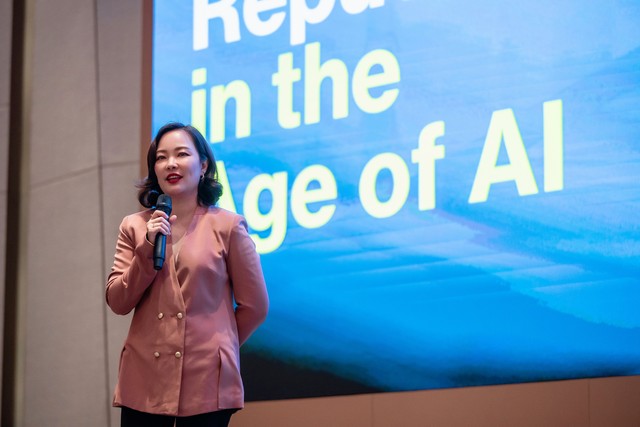
This was the central question at the inaugural Burson Talk 2026, "Navigating Reputation in the Age of AI."
We have officially entered the "Zero-Click" era. Today, consumers and business decision-makers are increasingly bypassing traditional search engines. Instead of scrolling through pages of blue links, they are tasking AI assistants with doing the heavy lifting—summarizing options, comparing brands, and making recommendations without the user ever clicking through to a source website.
For brands, this shift represents a profound challenge. When AI becomes the ultimate gatekeeper of information and reputation, how do you ensure your brand is not just seen, but chosen?
This critical shift was the focus of the inaugural Burson Talk 2026 session, titled "Navigating Reputation in the Age of AI." Designed to explore how brands can thrive in an AI-driven landscape, the event offered a deep dive into Generative Engine Optimization (GEO), advancing it from a visibility to reputation.
The Shift from Search to Synthesis
For years, Search Engine Optimization (SEO) was the gold standard for driving digital traffic. However, as generative AI models increasingly synthesize web content into direct answers, a complementary approach is required. GEO focus shifts from merely driving web traffic to structuring, optimizing, and distributing content so that generative AI platforms recognize a brand as the most authoritative, credible, and relevant answer to a user’s query.

"AI’s growing influence has fundamentally changed how decisions are made," noted Kedsararak Lertphittaya, Managing Director of the host agency's Thailand market. "We have moved into a world where people delegate their intent to AI—with initial research and consideration automatically taken care of. This means brand visibility across media channels may no longer be enough. Organizations must move beyond isolated campaigns and build a comprehensive information ecosystem that raises both visibility and the likelihood of being chosen as the definitive answer."
Crucially, ignoring this shift poses a significant reputational risk. Because AI models are designed to provide answers even when up-to-date information is scarce, brands that do not actively manage their digital footprint risk being misrepresented by AI responses that are outdated, incomplete, or inaccurate.
The "3C" Framework: A Blueprint for AI-Era Reputation
During the session, Burson’s experts introduced a practical, strategic blueprint known as the agency’s 3C Framework to help organizations manage their reputation in this new environment:
- Consistent Narrative: AI thrives on clarity. Brands must deliver their story with absolute consistency across all channels. This involves developing a Narrative Lexicon—a set of precise, easily digestible key messages that are easily retrieved and cited by AI.
- Compounding Authority: Credibility in the AI era is built through diverse, multi-source validation. Combining earned media coverage, third-party expert perspectives, and authentic consumer feedback creates a rich tapestry of validation that AI models recognize as highly credible.
- Chorus of Content: A brand’s narrative must be distributed across every channel that influences the target audience's decision-making process. From traditional press and executive thought leadership to specialized industry research and consumer-focused content, a broad presence ensures maximum prominence in AI training data.
Building an Evidence Ecosystem
Winning in the age of generative search requires a continuous cycle of analysis and adaptation. The session outlined how Burson helps clients build evidence ecosystem via a structured, systematic approach put these concepts into practice.
1. Baseline Audit: Assess how leading AI platforms currently source, synthesize, and present information about a brand.
2. Content & Narrative Structure: Structure content and format across all channels to make it as easily retrievable by AI models as possible.
3. Ecosystem Activation: Distribute structured narratives comprehensively across earned, owned, and paid channels.
4. Monitor & Optimize: Continuously track AI responses and refining content to ensure narratives remain visible and credible as algorithms evolve.
Burson's approach to GEO also ensures that every instance of AI visibility carries greater weight and credibility through Decipher, Burson’s proprietary cognitive AI platform which forecasts how target audiences will respond to content and narratives before they are even launched.
The Path Forward
As the Burson Talk 2026 session demonstrated, AI is reshaping the flow of information. Today, consumers increasingly rely on AI to synthesize their choices, the brands that survive and thrive will be those that actively shape the data environments these systems rely on. By embracing Generative Engine Optimization and structured frameworks like the 3Cs, forward-thinking organizations can ensure their reputation remains strong, credible, and visible.
The session concluded with reminding brand marketers that visibility in the AI era should carry genuine weight and credibility in the target audience’s decision-making process.
To learn more, download The Credibility Paradox here: https://www.bursonglobal.com/p/beyond-geo